

Signs It’s Time to Replace Your Pool Pump
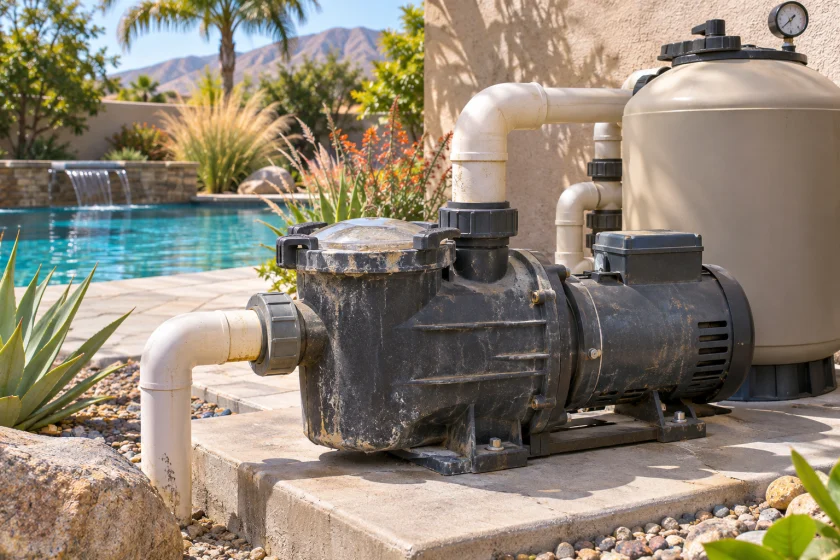
Warning Signs of a Failing Pool Pump
Unusual or Increasing Noise
A healthy pump should run with a steady sound. Grinding, screeching, rattling or loud humming can point to worn bearings, a damaged motor, trapped debris or restricted movement. A sudden change in sound deserves attention even if the pump is still circulating water.
Water Leaking Around the Pump
Small leaks can begin with a seal, gasket or fitting. Left unresolved, moisture may damage the motor or nearby electrical components. A minor seal leak may be repairable, while cracks in the housing or repeated leaks may make replacement more practical.
The Pump Loses Prime
A pump that repeatedly fills with air or struggles to pull water may have a suction-side air leak, low water level, blocked line, damaged lid seal or another circulation problem. Repeated loss of prime can reduce filtration and place added stress on the pump.
Weak Flow or Poor Circulation
Low return flow does not always mean the pump has failed. A dirty filter, clogged basket, closed valve or plumbing obstruction can create similar symptoms. If routine cleaning does not restore flow, the pump and complete circulation system should be evaluated.
Frequent Shutdowns or Electrical Problems
A pump that overheats, trips a breaker or turns off unexpectedly may have a failing motor, damaged wiring or inadequate airflow. Turn the equipment off and schedule service rather than repeatedly resetting it. Electrical pool equipment should be inspected by a qualified professional.
Repairs Are Becoming Routine
One repair does not automatically justify replacement. However, repeated service calls, unavailable parts or recurring motor and seal problems can make an older pump expensive to keep running. Comparing the repair history with the cost and benefits of a modern pump can clarify the better long-term choice.
When Repair May Be Enough
Repair may make sense when the pump is relatively new, properly sized and otherwise reliable. Replaceable seals, gaskets, lids, baskets and certain motor components can often restore normal operation. The technician should also correct the condition that caused the failure, such as poor airflow, a plumbing restriction or improper water level.
When Replacement Makes More Sense
Replacement may be the better option when the housing is cracked, the motor has failed repeatedly, parts are no longer available or the pump is outdated and inefficient. A properly selected variable-speed pump can offer quieter operation and flexible circulation settings. Correct sizing and programming matter, so the new pump should be matched to the pool's plumbing, filter and operating needs.
Pool Pump Questions
How long should a pool pump last
Service life varies based on installation, operating hours, environment and maintenance. Age is only one factor. Condition and repair history provide a better picture of whether the pump remains dependable.
Can a pool operate with a failing pump
Running a damaged pump can worsen the failure and reduce filtration. If the pump is leaking heavily, overheating, tripping a breaker or making severe mechanical noise, turn it off and request service.
Should I replace my pump with the same model
Not always. The replacement should be selected for the pool's size, plumbing, filtration system and desired operating schedule. A direct swap may overlook opportunities to improve efficiency or correct an improperly sized system.
Schedule a Pool Pump Evaluation
Poolwerx Redlands can inspect your circulation system, explain the available repair and replacement options, and help you select equipment that fits your pool. Visit our Redlands pool supply store or contact our service team for help with a noisy, leaking or unreliable pump.